
Building a reliable melasma sun protection routine is not just a matter of choosing the highest SPF. Ultraviolet exposure can deepen pigment, while visible light can also contribute to melasma—especially in darker skin tones. The American Academy of Dermatology recommends a broad-spectrum, water-resistant SPF 30 or higher and specifically suggests a tinted formula containing iron oxide for visible-light coverage.
This comparison focuses on five tinted face sunscreens sold on Amazon. We looked at UV filters, iron oxides, shade flexibility, finish, water resistance, makeup compatibility, and the likelihood that someone will apply the formula consistently. Colorescience offers the most complete specification set, while La Roche-Posay, EltaMD, CeraVe, and TIZO3 each make more sense for a particular skin type or finish preference. No sunscreen treats melasma by itself, and no product can prevent every flare, so pair sunscreen with shade, a wide-brimmed hat, and dermatologist-guided care when needed.
As an Amazon Associate, we earn from qualifying purchases. This does not increase your cost.
Our Top Picks at a Glance
| Best For | Product | Key Benefit | Deal |
|---|---|---|---|
| Best OverallShade flexibility and daily coverage | Colorescience Face Shield Flex SPF 50 | Six shades, iron oxides, PA++++, and 40-minute water resistance | See Deal |
| Best for Sensitive SkinA light, fragrance-free mineral fluid | La Roche-Posay Anthelios Mineral Tinted SPF 50 | 100% mineral UV filter with iron-oxide tint | See Deal |
| Best for Acne-Prone SkinLightweight everyday wear | EltaMD UV Clear Tinted SPF 46 | 5% niacinamide in a sheer, non-comedogenic formula | See Deal |
| Best ValueDry or barrier-conscious skin | CeraVe Hydrating Mineral Sheer Tint SPF 30 | Mineral filters, three shades, ceramides, and hyaluronic acid | See Deal |
| Best Matte PrimerOily skin and makeup prep | TIZO3 Facial Mineral Sunscreen and Primer SPF 40 | Silky matte finish with 80-minute water resistance | See Deal |
The 5 Best Tinted Sunscreens for Melasma Sun Protection
01 · BEST OVERALL
Colorescience Face Shield Flex SPF 50
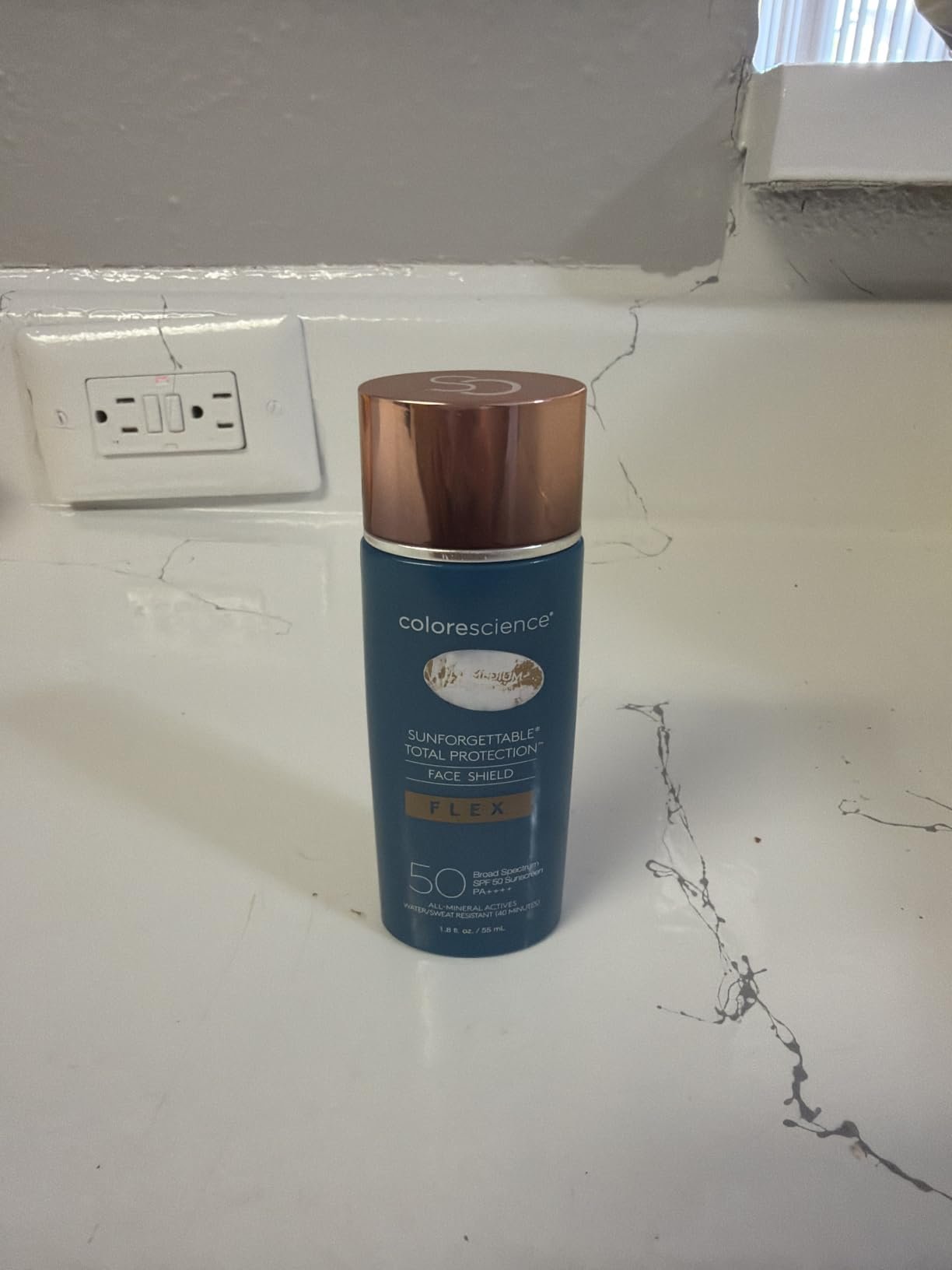
Best forBroad shade choice and buildable coverage
Formula12% zinc oxide with iron oxide pigments
TextureLight liquid with color-activating pigments
FinishDemi-matte; six shades; 40-minute water resistance
Why it stands out
Face Shield Flex is the strongest all-around choice for melasma sun protection because it combines broad-spectrum SPF 50, PA++++, iron oxides, six shades, and a 40-minute water-resistance claim. The pigments begin in a pale base and develop as the formula is rubbed between the fingertips, creating more color coverage than a typical sheer tint. That makes it useful for people who want one morning step to reduce white cast and visually even uneven tone. The selected Amazon link opens the Fair shade, so confirm the color variation before ordering. Its higher price is the main tradeoff, and the tone-adapting idea does not remove the need for a real shade match.
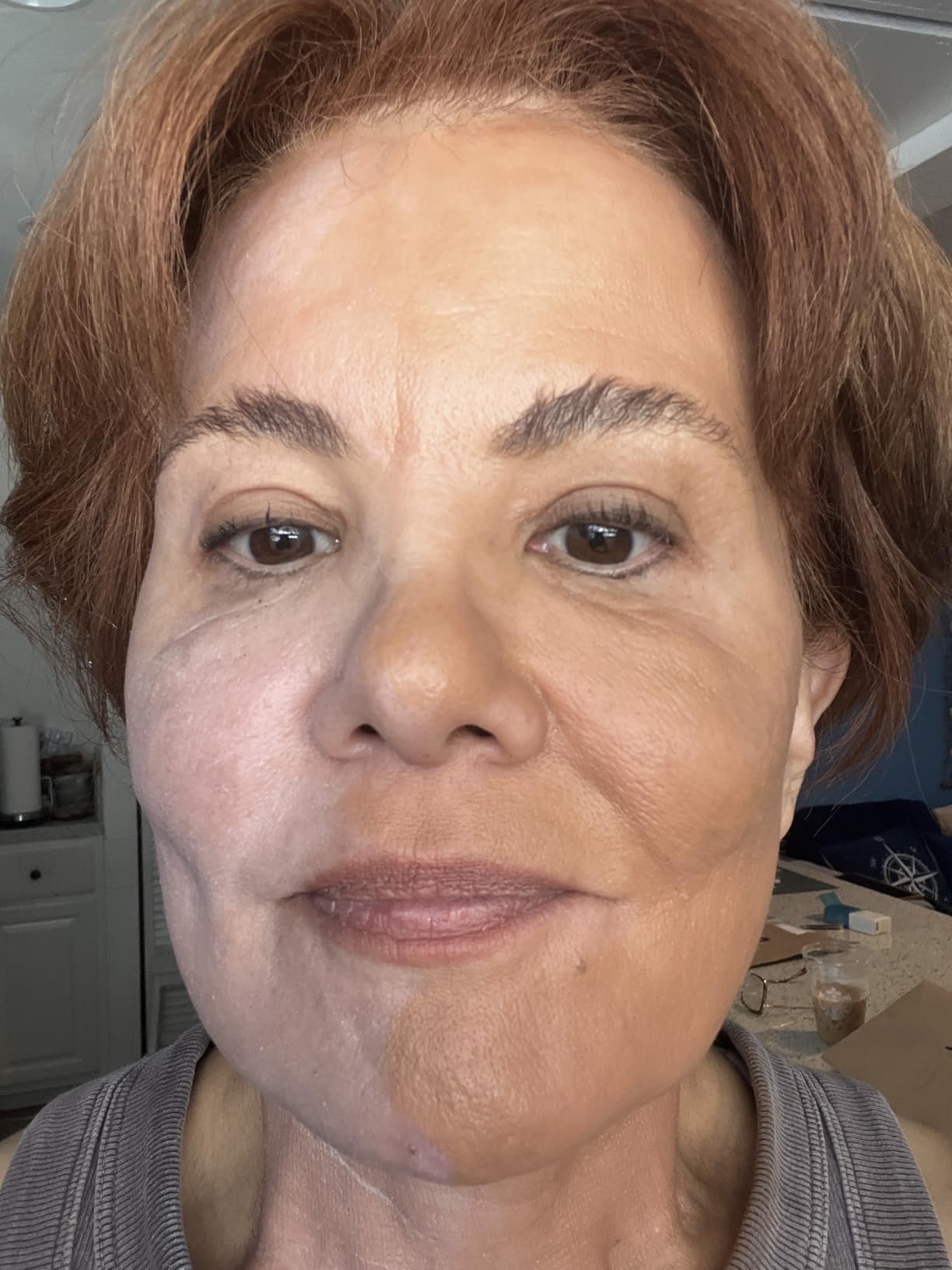
What it feels like in a real routine
Dispense the sunscreen onto clean fingertips, rub gently until the encapsulated color develops, then spread an even layer over the face, ears, jawline, and other exposed areas. The fluid has enough slip for deliberate blending and settles into a natural demi-matte finish rather than a flat powder look. Let the shade develop for a minute before deciding whether to add another layer or makeup.
Medium color coverage can replace a light complexion base on casual days, but building several cosmetic layers is not a substitute for applying the label-directed sunscreen amount. Normal and combination skin are the easiest fit; visible flakes may need moisturizer first. The 40-minute water resistance is helpful for commuting and light outdoor activity, yet longer swimming or heavy sweating still requires timely reapplication. For someone who wants an iron oxide sunscreen with meaningful shade choice, it is the most versatile option here.
Buy it if
- You want six shade choices
- You prefer buildable tint over a barely visible wash
- You need a water-resistant daily option
Skip it if
- You want the lowest-cost formula
- You dislike pigment that needs time to develop
- You prefer a very sheer, dewy sunscreen
What works
- SPF 50 and PA++++
- Iron oxides with medium color coverage
- Demi-matte finish and 40-minute water resistance
Tradeoffs
- Premium price
- Shade selection still requires care
02 · BEST FOR SENSITIVE SKIN
La Roche-Posay Anthelios Mineral Tinted SPF 50
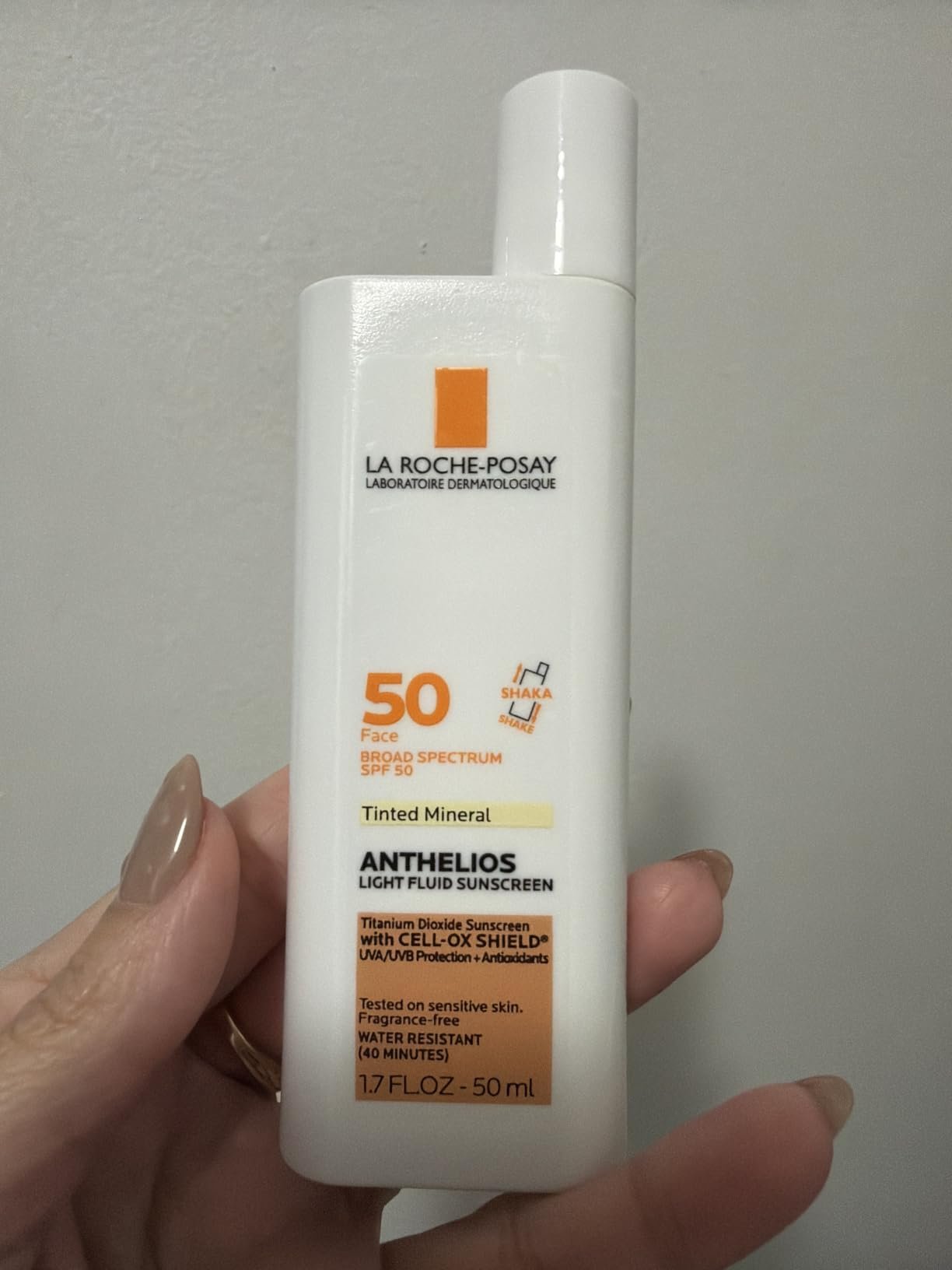
Best forSensitive skin and lightweight mineral protection
Formula11% titanium dioxide with iron oxides
TextureThin, fast-spreading shake fluid
FinishNatural glow; fragrance-free; 40-minute water resistance
Why it stands out
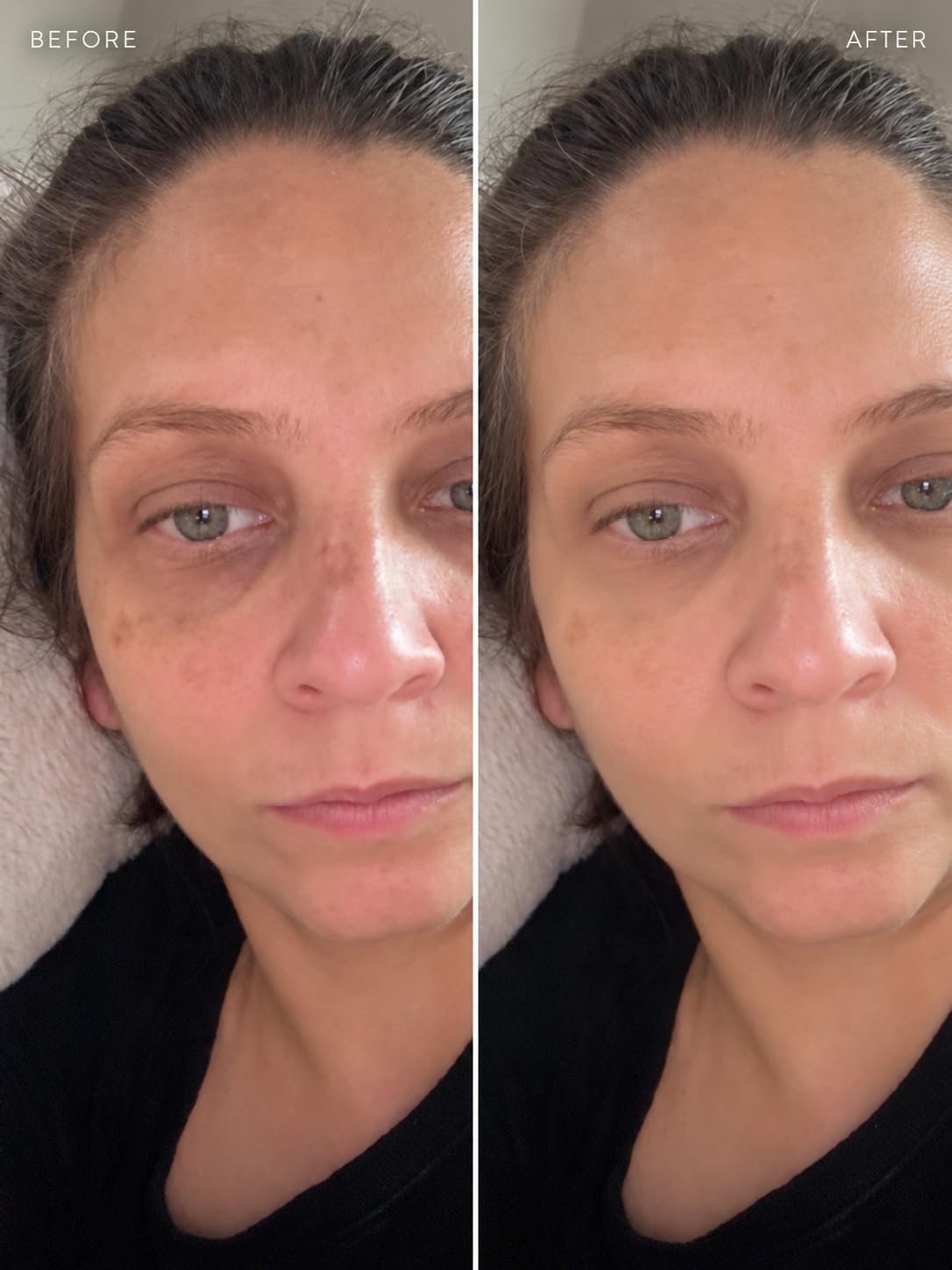
La Roche-Posay is the most straightforward sensitive-skin pick: a fragrance-free, oil-free, non-comedogenic tinted mineral fluid that uses titanium dioxide as its active UV filter and iron oxides for color. The thin texture spreads more easily than a dense mineral cream, which matters when the goal is to apply an even layer without prolonged rubbing. The current shade family is broader than the old one-tint version, but the supplied Amazon link opens the Light variation, so check the selected shade at checkout. It is a practical tinted sunscreen for melasma when a light texture matters more than moisturizer-like richness or primer-level smoothing.
What it feels like in a real routine
Shake the bottle well, dispense the fluid in stages, and work section by section before it sets. The texture feels thin and mobile at first, then dries down to a light natural glow. Because the pigment is sheer, it can soften the look of uneven tone without behaving like full foundation. Apply it as the final skincare step and give it time to settle before adding makeup.
The formula suits mornings when a heavier mineral lotion would feel too occlusive, including warm or humid weather. Dry skin may still want moisturizer underneath, while oily skin may prefer a small amount of powder over the T-zone. The 40-minute water-resistance statement is useful, but it is shorter than TIZO3’s 80-minute claim. As with any sunscreen for melasma, even coverage and reapplication matter more than squeezing a smaller amount from a high-SPF bottle.
Buy it if
- You prefer a thin mineral fluid
- You avoid added fragrance
- You want a tint that can sit under makeup
Skip it if
- You want richer hydration
- You need full foundation-like coverage
- The selected Light shade does not match you
What works
- 100% mineral UV filter
- Iron-oxide tint and SPF 50
- Sensitive-skin-focused formula
Tradeoffs
- Runny texture requires shaking
- Only 40 minutes of water resistance
03 · BEST FOR ACNE-PRONE SKIN
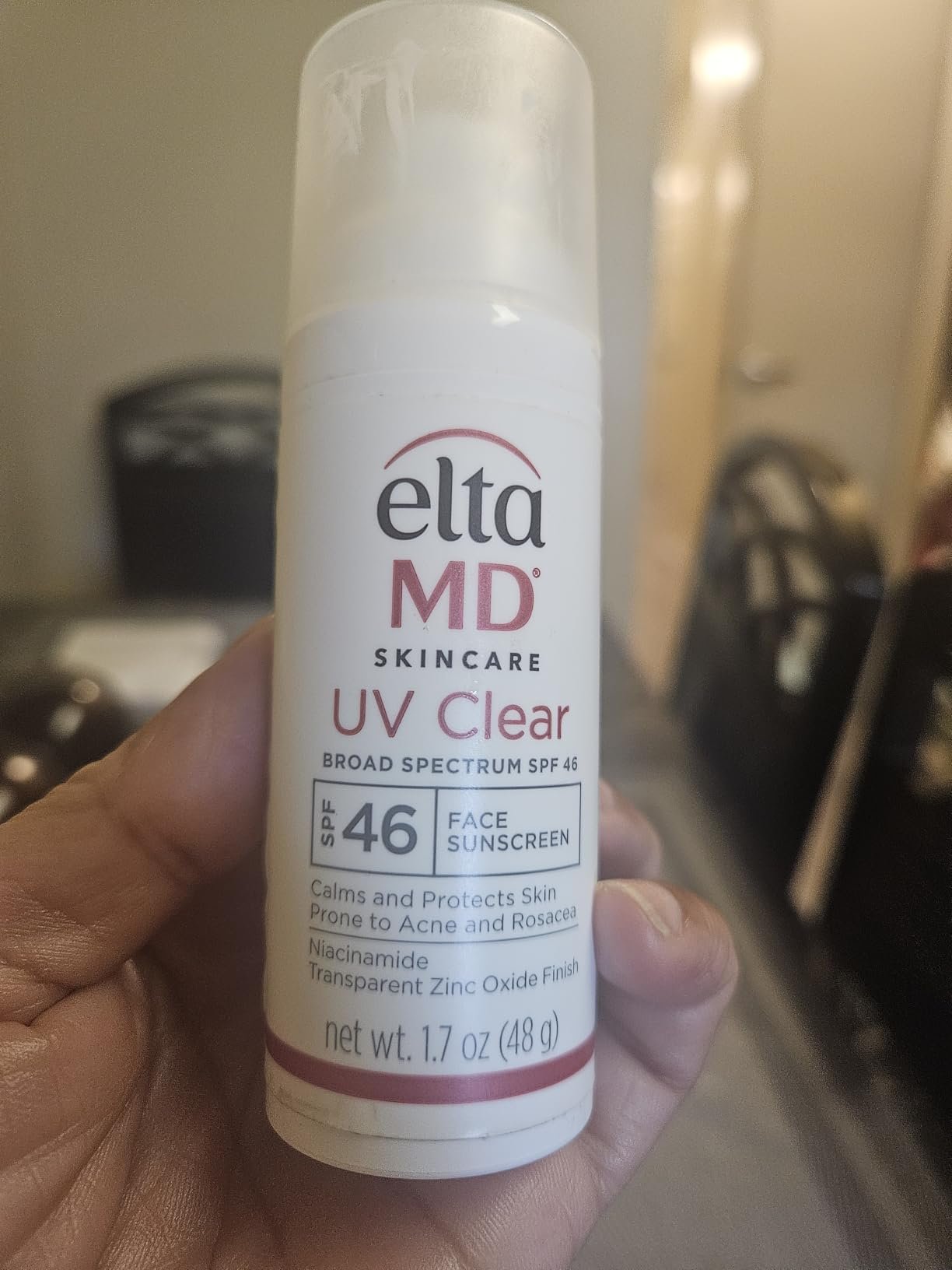
EltaMD UV Clear Tinted SPF 46
Best forAcne-prone, combination, or redness-prone skin
Formula9% zinc oxide, 7.5% octinoxate, 5% niacinamide, and iron oxides
TextureLightweight lotion
FinishSheer tint; fragrance-free; not water-resistant
Why it stands out
UV Clear Tinted earns its place for acne-prone and combination skin rather than for the highest SPF or longest water resistance. The hybrid filter system combines zinc oxide with octinoxate, while the formula includes 5% niacinamide and a sheer iron-oxide tint. It is oil-free, fragrance-free, and non-comedogenic, giving users who dislike rich mineral creams a lighter daily option. The single standard tint will not suit every depth or undertone, and the linked Amazon variation should read “Tinted, 1.7 oz.” For office days and ordinary errands, however, it is one of the least makeup-like ways to add tint to a melasma sun protection routine.
What it feels like in a real routine
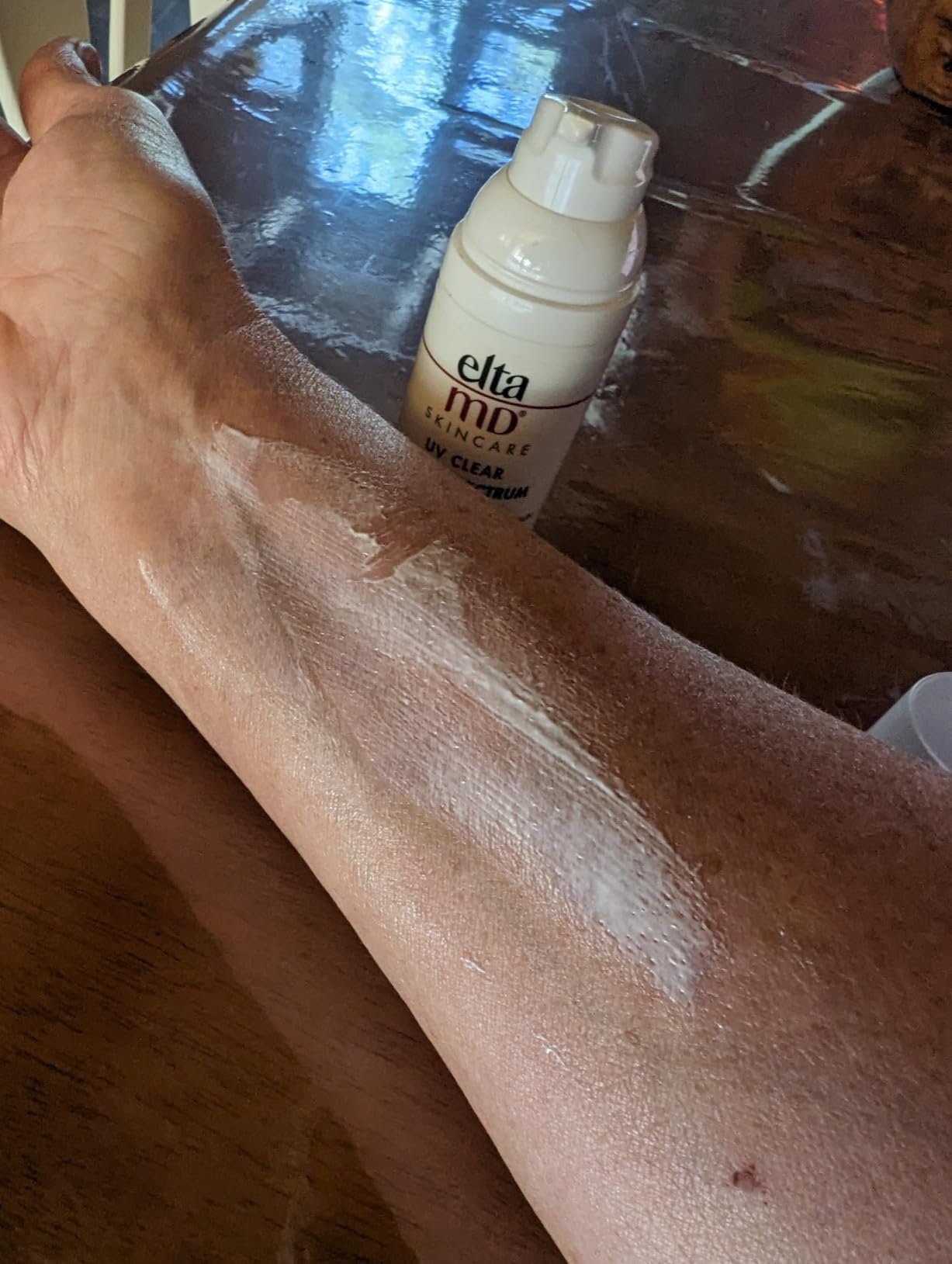
The pump dispenses a light lotion that spreads with less drag than many all-mineral formulas. Apply it generously to the face and neck 15 minutes before exposure, smoothing rather than overworking each area. The finish is sheer and comfortable enough to wear alone or beneath makeup, and niacinamide makes the ingredient list appealing to users already building a simple blemish-conscious routine.
Its biggest limitation is equally clear: EltaMD lists UV Clear Tinted as non-water-resistant. Use a water-resistant sunscreen instead for swimming, sweating, or sustained outdoor exercise. The tint also works best across a limited light-to-medium-deep range, so deeper complexions should assess the current shade carefully. This is the daily-comfort pick, not the outdoor-performance winner, and its tinted status does not turn it into a treatment for discoloration.
Buy it if
- You want a light, non-comedogenic lotion
- Your routine already favors niacinamide
- You mainly need an everyday city sunscreen
Skip it if
- You need water resistance
- A single sheer tint rarely matches you
- You want a 100% mineral filter system
What works
- Comfortable under makeup
- 5% niacinamide
- Fragrance-free and oil-free
Tradeoffs
- Not water-resistant
- Limited tint flexibility
04 · BEST VALUE
CeraVe Hydrating Mineral Sheer Tint SPF 30
Best forDry skin and budget-conscious daily wear
FormulaZinc oxide, titanium dioxide, iron oxides, ceramides, niacinamide, and hyaluronic acid
TextureMoisturizing mineral lotion
FinishNatural glow; three shades; not water-resistant
Why it stands out
CeraVe is the value choice for anyone who wants a moisturizing iron oxide sunscreen without moving into premium pricing. The mineral formula uses zinc oxide and titanium dioxide, with ceramides, hyaluronic acid, and niacinamide supporting a more hydrated skin feel. Light, Medium, and Deep shades are a meaningful improvement over a one-tint product, although three options still leave gaps. The linked Amazon page opens the Light shade. SPF 30 meets the AAD’s minimum recommendation, but the formula is not water-resistant, so this is better for predictable daily exposure than the beach or outdoor sport.
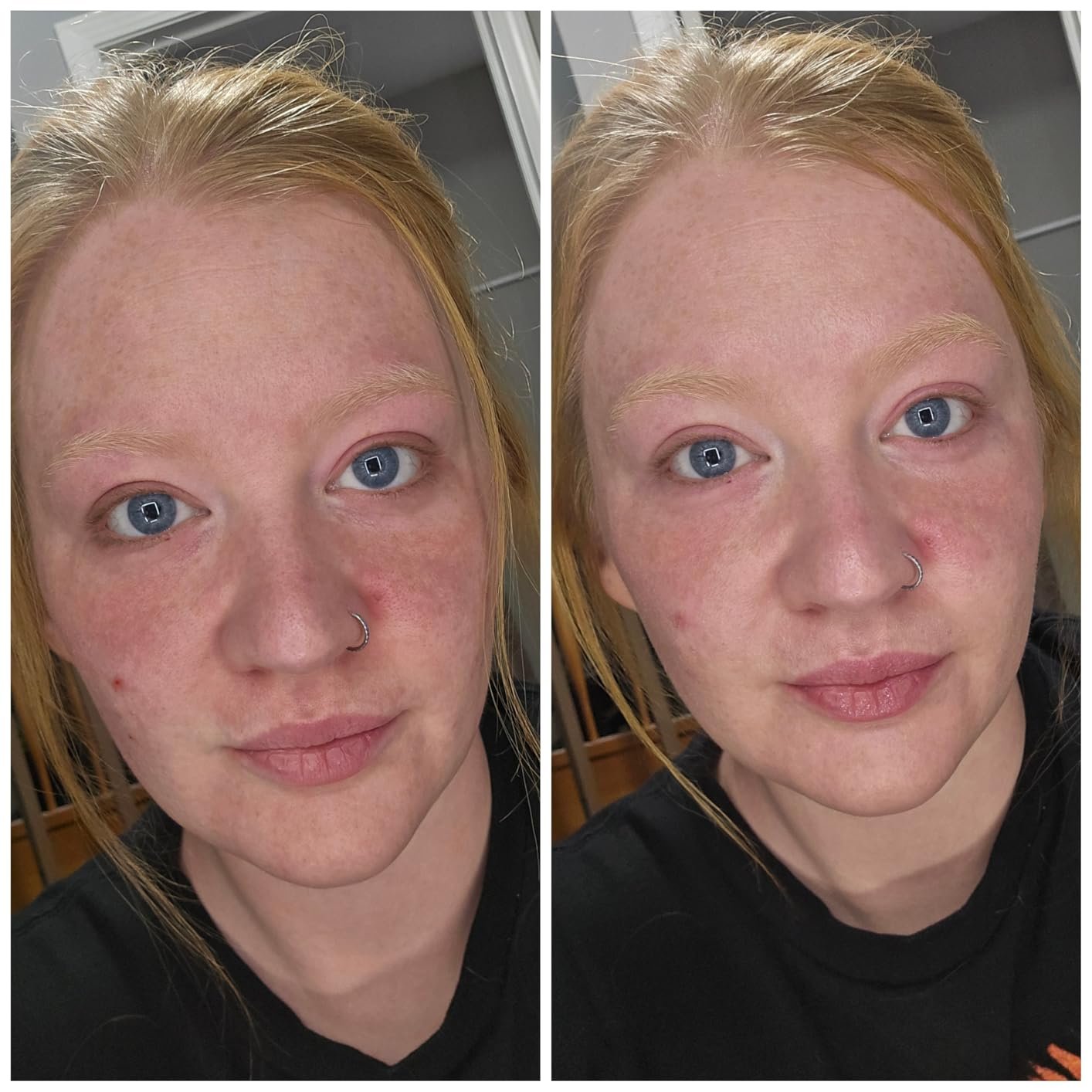
What it feels like in a real routine
Apply the lotion after moisturizer—or in place of a separate moisturizer if the formula alone is comfortable—then blend evenly across the face and neck. Compared with TIZO3’s silicone primer feel, CeraVe stays creamier and leaves more of a healthy glow. Dry and normal skin will usually appreciate that cushion, while an oily T-zone may need extra setting time or a light powder.
The tint helps counter a mineral white cast, but the correct shade still matters. Let the sunscreen settle before makeup so foundation does not mix unevenly with the mineral layer. Because there is no water-resistance claim, switch products for swimming and heavy sweat. In a simple melasma sun protection routine, CeraVe makes the most sense when affordability, barrier-friendly ingredients, and comfortable everyday use encourage consistent application.
Buy it if
- You want a budget-aware mineral tint
- Your skin prefers a moisturizing finish
- You value ceramides and hyaluronic acid
Skip it if
- You need water resistance
- You prefer a truly matte finish
- None of the three shades matches you
What works
- Accessible price
- Three flexible shade options
- Hydrating, fragrance-free formula
Tradeoffs
- Can feel rich on oily skin
- SPF 30 is the lowest in this group
05 · BEST MATTE PRIMER
TIZO3 Facial Mineral Sunscreen and Primer SPF 40
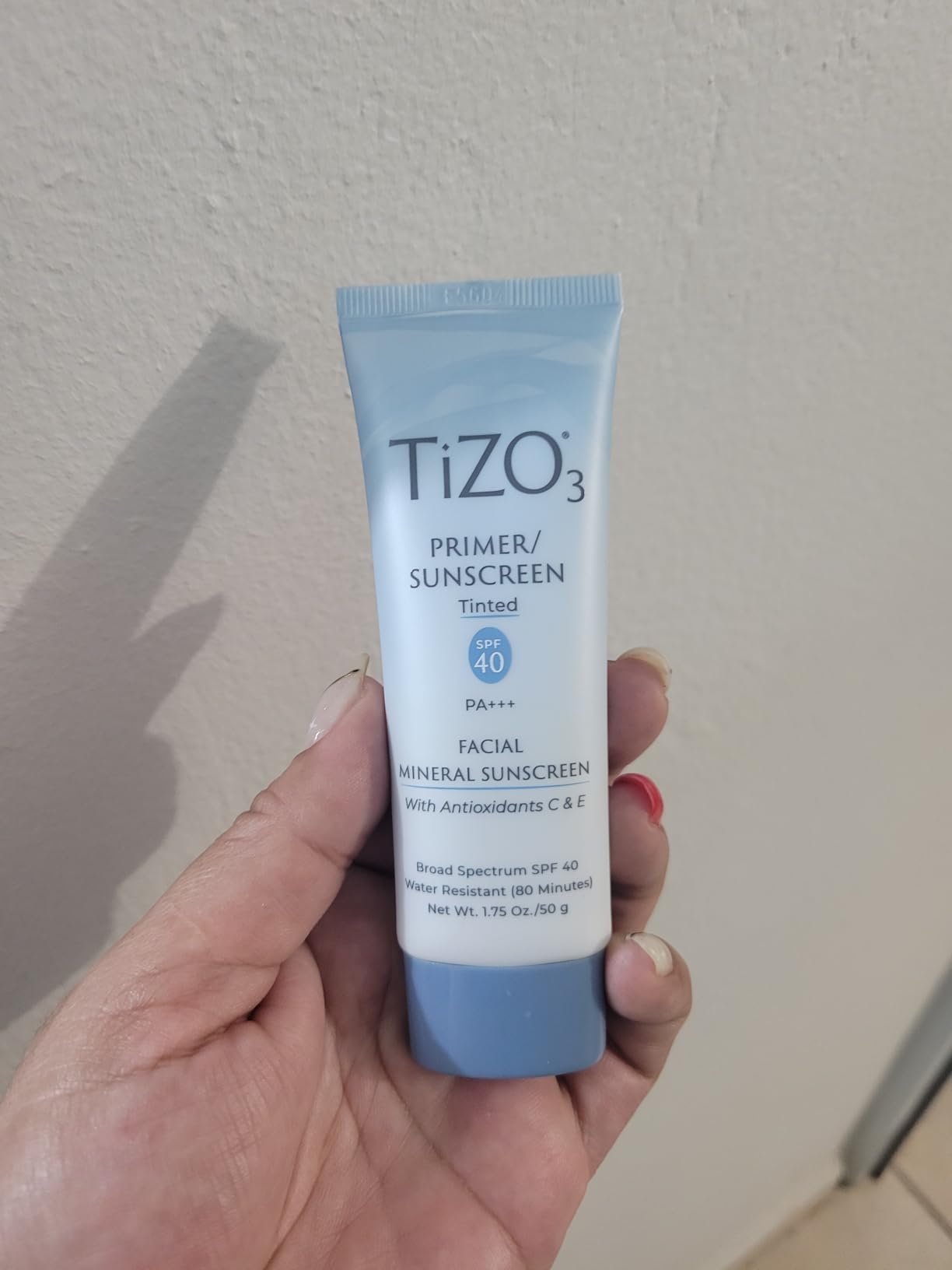
Best forOily skin and a smoothing makeup base
Formula8% titanium dioxide, 3.8% zinc oxide, and iron oxide tint
TextureSilky silicone primer
FinishMatte; PA+++; 80-minute water resistance
Why it stands out
TIZO3 is the best choice for someone who wants sunscreen and primer behavior in the same step. Its anhydrous, silicone-rich texture feels velvety, blurs the look of surface texture, and dries matte rather than dewy. Titanium dioxide and zinc oxide supply the mineral SPF 40 base, while iron oxide provides the tint. The label also states PA+++ and 80-minute water resistance, giving it the longest water-resistance period in this group. The limitation is shade flexibility: one warm universal tint cannot suit every complexion. For oily skin that normally struggles with slippery sunscreen under foundation, its finish is the main reason to consider it.
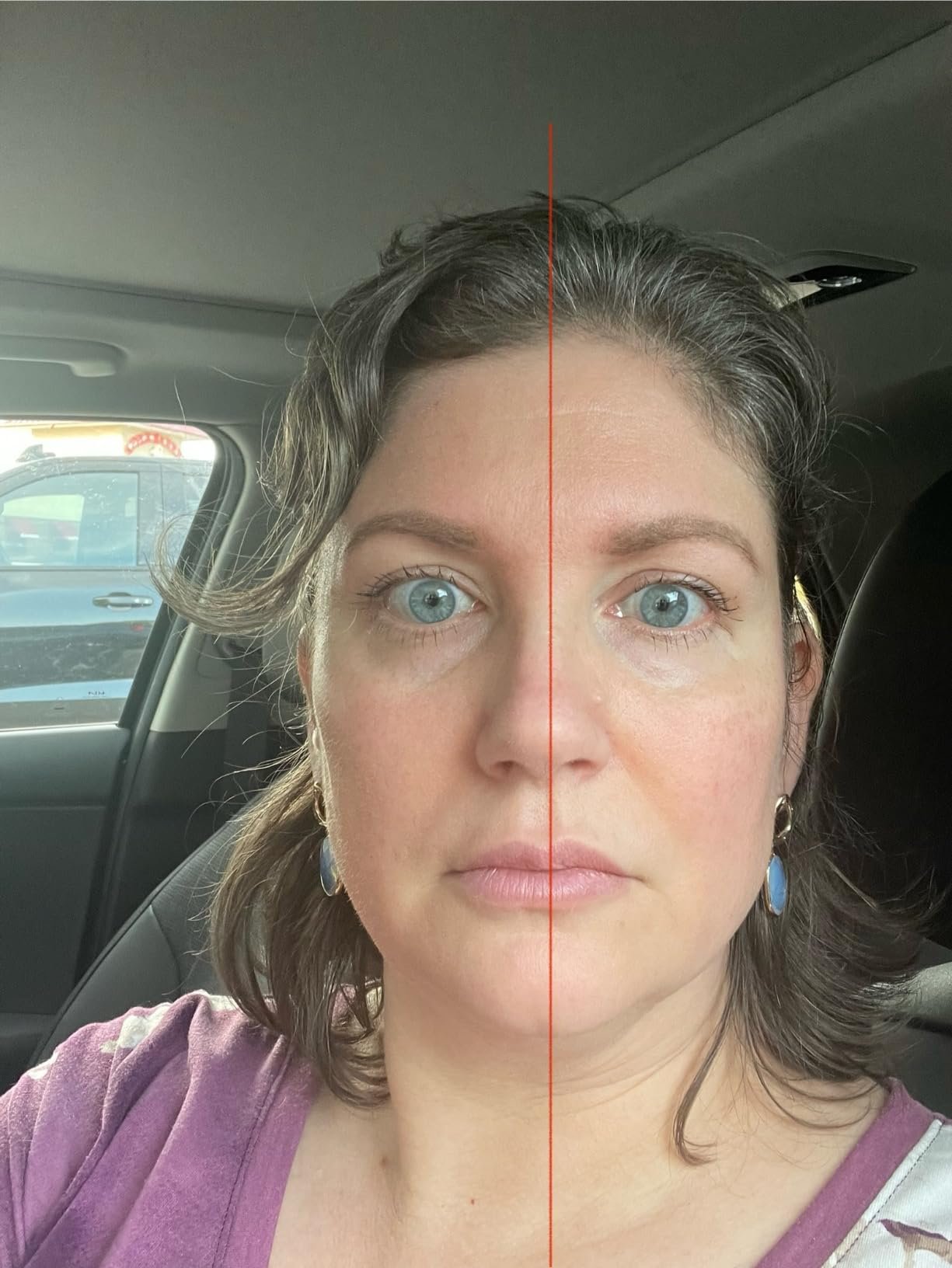
What it feels like in a real routine
Warm a small portion between the fingertips, then spread it in thin, overlapping sections until the face and neck have an even layer. The formula has the dry slip of a silicone primer and sets quickly, so pressing and smoothing tends to work better than repeatedly rubbing one area. Makeup can sit neatly over the matte surface after it has settled.
Normal-to-oily skin is the clearest match, particularly in humid weather. Dry or flaky skin may find the primer texture emphasizes rough patches unless moisturizer is applied first. The 80-minute water-resistance claim is useful for active days, though reapplication remains necessary after that interval or after toweling. TIZO3 can support visible light protection through its iron oxide tint, but the single shade and matte texture make a trial application especially important before relying on it for daily wear.
Buy it if
- You want sunscreen to double as primer
- You prefer a matte, silicone-smooth finish
- You need 80-minute water resistance
Skip it if
- You avoid silicone-heavy textures
- Your skin is dry or visibly flaky
- The universal tint does not match you
What works
- Matte primer finish
- Mineral UV filters plus iron oxide
- Longest water-resistance claim here
Tradeoffs
- Only one tint
- Can feel too dry for dehydrated skin
How We Chose
We limited the comparison to the five Amazon products and image pairs supplied for this article, then verified that each linked variation was the intended tinted sunscreen. We compared labeled SPF, UV-filter type, the presence of iron oxides, shade range, finish, fragrance, water resistance, skin-type fit, makeup compatibility, and the practicality of applying a full, even layer. We also used current manufacturer information and the AAD’s guidance on melasma sun protection, including the role of tinted sunscreen with iron oxide. Colorescience ranked first for its combined SPF 50, PA++++, six shades, coverage, and water resistance; the other products lead for narrower needs. Supplied wear and comparison photos illustrate packaging or finish only. They are not controlled tests and do not prove that a sunscreen will lighten melasma. Formulas, shade names, packaging, availability, and Amazon variations can change, so verify the current label before buying.
Which One Is Best for You?
| If You Want... | Choose |
|---|---|
| The broadest shade choice and buildable coverage | Colorescience Face Shield Flex SPF 50 |
| A thin fragrance-free mineral fluid | La Roche-Posay Anthelios Mineral Tinted SPF 50 |
| A light daily formula for acne-prone skin | EltaMD UV Clear Tinted SPF 46 |
| A moisturizing mineral tint at a lower price | CeraVe Hydrating Mineral Sheer Tint SPF 30 |
| A matte primer with 80-minute water resistance | TIZO3 Facial Mineral Sunscreen and Primer SPF 40 |
How to Choose Sunscreen for Melasma
Start with broad-spectrum SPF 30 or higher
SPF mainly describes protection from UVB, so the words “broad spectrum” matter too. For daily melasma sun protection, the AAD recommends broad-spectrum SPF 30 or higher, water resistance, application about 15 minutes before going outdoors, and reapplication at least every two hours. Reapply sooner after swimming or sweating according to the label. A high number does not make a thin, missed, or infrequently reapplied layer reliable.
Look for tint and iron oxides
UV filters and pigments do different jobs. Zinc oxide and titanium dioxide are UV filters; iron oxides create tint and can add visible light protection. That is why a tinted sunscreen for melasma is often preferred over an otherwise similar untinted formula. Check the inactive-ingredient list for iron oxides or CI 77491, CI 77492, and CI 77499. The presence of pigment does not prove that every formula performs equally against visible light, so avoid interpreting tint as a treatment claim.
Choose a shade you will apply generously
The best theoretical formula is not useful if the tint looks orange, gray, pale, or too deep at the amount needed for protection. Check the jawline and the center of the face in daylight, then wait several minutes because mineral and pigment-heavy formulas can settle or deepen. Colorescience offers six shades, La Roche-Posay and CeraVe offer several, and EltaMD UV Clear Tinted and TIZO3 provide much less flexibility. Verify the exact Amazon variation before checkout.
Match finish to skin type and makeup
Dry skin may prefer CeraVe’s moisturizing lotion or the more flexible finish of Colorescience. Oily skin may find TIZO3’s matte primer easier under foundation. La Roche-Posay has a thin shake-fluid feel, while EltaMD is the light daily lotion in the group. Test the full routine—not just the sunscreen—because moisturizer, primer, foundation, application pressure, and waiting time can all affect pilling and patchiness.
Treat water resistance as a separate decision
EltaMD UV Clear Tinted and CeraVe Sheer Tint are not water-resistant. Colorescience and La Roche-Posay list 40 minutes, while TIZO3 lists 80 minutes. If heat, sweat, swimming, or outdoor exercise is part of the day, choose a product with a suitable water-resistance statement and follow its reapplication directions. Daily sunscreen for melasma also works best alongside shade, sunglasses, and a wide-brimmed hat; sunscreen is one layer of protection, not the whole plan.
Frequently Asked Questions
What type of sunscreen is best for melasma?
A broad-spectrum, water-resistant SPF 30 or higher that you can apply generously and reapply consistently is the baseline. The AAD also recommends a tinted formula containing iron oxide because visible light can contribute to melasma. Shade match, skin comfort, and real-world use are therefore as important as the front-label SPF.
Why are iron oxides useful in a tinted sunscreen for melasma?
Iron oxides are pigments rather than FDA-listed UV filters. They add color and can improve visible light protection, which is relevant because visible light may worsen melasma, particularly in darker skin tones. Look for “iron oxides” or CI 77491/77492/77499 in the inactive ingredients. An iron oxide sunscreen supports prevention-focused care; it does not bleach pigment or replace treatment.
Can sunscreen fade existing melasma?
Sunscreen does not directly remove existing pigment. Consistent photoprotection can reduce a major trigger and help a dermatologist-directed treatment plan work without as much repeated exposure. If patches are new, changing, persistent, or difficult to distinguish from another condition, see a board-certified dermatologist rather than self-diagnosing.
Should I choose mineral or chemical sunscreen for melasma?
The better option is the broad-spectrum product you can wear correctly every day. This list includes all-mineral formulas and EltaMD’s hybrid mineral-organic filter system. For pigment concerns, tint and iron oxides are the extra variables to examine. Sensitive skin may prefer a fragrance-free mineral formula, but individual tolerance varies.
How much face sunscreen should I apply?
Follow the current Drug Facts label and apply enough to cover all exposed skin evenly, including the hairline, ears, jaw, and neck. Apply about 15 minutes before outdoor exposure. Do not reduce the amount merely because a tinted formula provides more coverage than you want; choose a sheerer product or a better shade instead.
How often should I reapply sunscreen when I have melasma?
Reapply at least every two hours outdoors, and sooner after swimming, sweating, or toweling according to the product’s water-resistance directions. Indoor routines still depend on actual exposure, including time near bright windows. Hats and shade help reduce the burden on sunscreen during long outdoor periods.
Can I wear makeup over tinted sunscreen?
Yes. Let sunscreen settle into an even layer before applying foundation or powder with light pressure. TIZO3 behaves most like a matte primer, Colorescience can provide medium color coverage, and La Roche-Posay or EltaMD are sheerer. A cosmetic finish is useful only if the underlying sunscreen layer remains complete.
Is SPF 50 always better than SPF 30 for melasma sun protection?
SPF 50 offers more labeled UVB protection than SPF 30 when both are applied and maintained correctly, but it does not compensate for patchy coverage, an unsuitable tint, or missed reapplication. For melasma sun protection, broad spectrum, iron oxides, water resistance, application amount, and shade compatibility all affect the practical choice.
Final Verdict
Best overall: Colorescience Face Shield Flex SPF 50 has the most balanced specification set: six shades, iron oxides, SPF 50/PA++++, buildable coverage, and 40-minute water resistance. View Product
Best for sensitive skin: La Roche-Posay Anthelios Mineral Tinted SPF 50 combines a thin fragrance-free mineral fluid with an iron-oxide tint and 40-minute water resistance. View Product
Best value: CeraVe Hydrating Mineral Sheer Tint SPF 30 pairs three shades and mineral filters with ceramides, niacinamide, and hyaluronic acid at the most accessible price position here. View Product
The best melasma sun protection product is the one whose shade, finish, and directions make full daily application realistic. For the treatment side of the routine, compare our dark-spot products selected to support a melasma routine. For convenient top-ups, our guide to powdered sunscreen options for midday touch-ups explains where powder fits over a complete base layer, while our comparison of cleansers for removing water-resistant sunscreen can help build the evening step.